
 The report brings together evidence from Argentina, Bolivia, Brazil, Chile, Costa Rica and Uruguay to explore how children aged 9–17 experience the digital world. Drawing on nationally representative surveys, the report examines five dimensions of children’s digital lives: access and connectivity, digital opportunities, online risks, adult mediation, and digital skills.
The findings challenge simplistic narratives that frame the internet as either wholly beneficial or inherently harmful. Instead, they reveal children’s digital lives as diverse, dynamic and deeply influenced by broader social inequalities.
Access has expanded, but inequalities persist
Internet access at home is now widespread across the region. In most countries included in the study, more than 90% of children report having internet access in their homes. Argentina (96%) and Brazil (96%) report the highest levels of connectivity, while Bolivia (82%), despite recent progress, continues to lag behind.
However, these headline figures conceal important disparities. Children from lower socio-economic backgrounds remain less likely to have stable internet access and significantly less likely to have access to a computer or laptop for educational purposes.
The report highlights particularly stark inequalities in access to devices for studying. In Bolivia, for example, the gap between children from low- and high-income households in access to a computer at home for studying exceeds 60%. Differences are also evident in Argentina, Costa Rica and Chile.
Download full report (in Spanish)
Internet access has expanded across Latin America, but children’s digital opportunities remain shaped by persistent inequalities.
These findings suggest that while the first-level digital divide in connectivity is narrowing, a second-level divide in the quality of access and availability of educational resources remains firmly in place.
Children’s digital experience is becoming increasingly mobile
Mobile phones have become children’s primary point of access to the internet.
Across all countries with available data, children obtain their first internet-enabled phone before the age of ten. In countries with repeated measurements, this age has continued to decrease over time. In Chile, the average age of first access fell from 11 years to below nine years. Brazil has experienced a similar trend.
Ownership of mobile phones is also widespread. In several countries, more than four out of five children report having access to their own device.
Personal mobile phone ownership with internet access, by SES 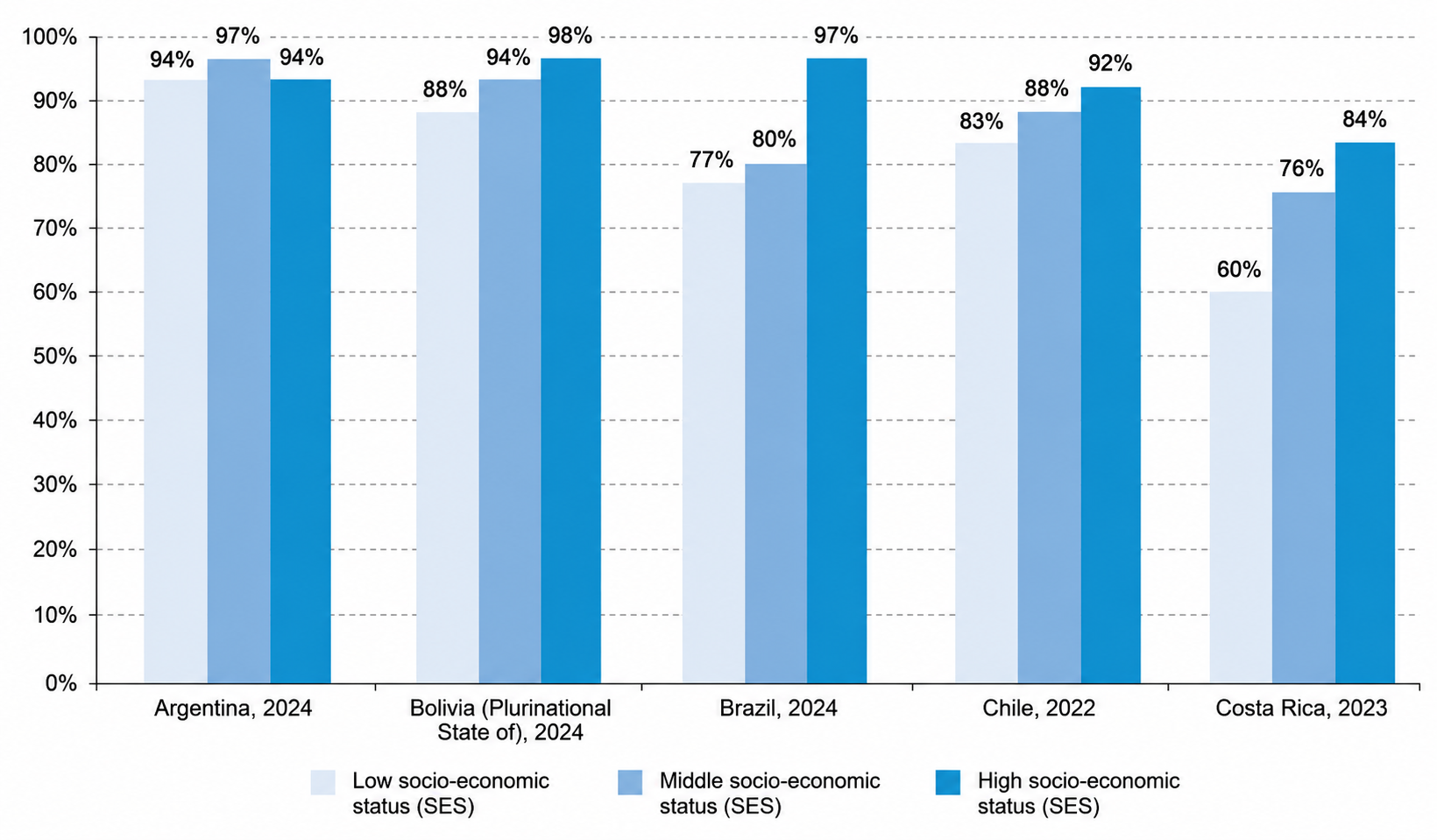
Yet access remains socially patterned. In most countries, children from higher socio-economic groups are more likely to own a mobile phone, although Argentina and Chile show more equitable patterns.
The smartphone has become central to children’s everyday lives – shaping how they communicate, learn, socialise and participate online.
Children’s digital lives are about more than screen time
Public debate often focuses on how much time children spend online. This report shifts attention to what children actually do there.
Entertainment activities dominate children’s digital practices. Watching videos, streaming films and series, and playing online games are among the most common activities reported across countries.
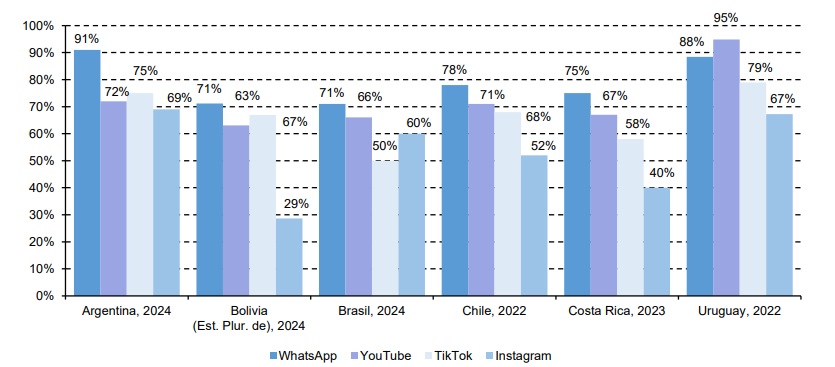
Communication is another core dimension of children’s online experiences. Platforms such as WhatsApp, YouTube and TikTok feature prominently in children’s everyday routines, although patterns of use vary according to age and gender.
Digital platforms most used by children
Alongside entertainment and communication, children also use digital technologies for learning. Children report using the internet to:
- search for information about topics that interest them;
- learn new skills through tutorials;
- explore hobbies and personal interests; and
- complete school assignments.
What children do online matters more than how long they spend there.
Online opportunities: learning new things
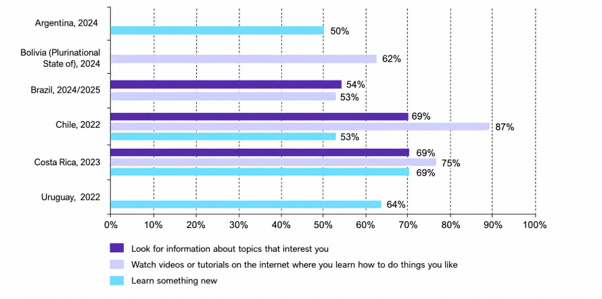
These findings paint a picture of children as active participants in digital environments rather than passive consumers of content.
Download full report (in Spanish)
Opportunities and risks coexist
The report also documents the challenges children encounter online.
Many children report difficulties regulating their use of mobile phones and the internet. Some perceive that their online activities negatively affect relationships with family members and friends, while others feel that internet use can interfere with school performance.
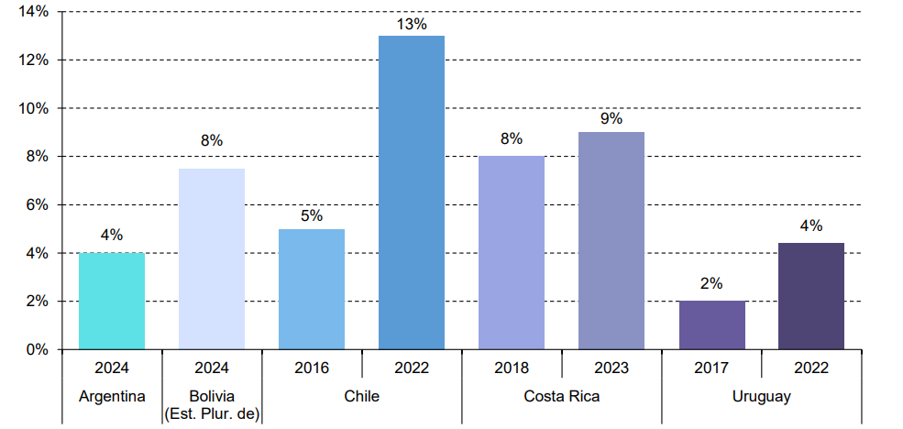
Negative experiences online are far from uncommon. Children across the region report exposure to upsetting or harmful experiences online, although prevalence varies considerably between countries, ranging from around 13% in Costa Rica to 54% in Chile. Between 4% (Uruguay and Argentina) and 13% (Chile) of children have these negative experiences at least once a week. There are notable differences also by age and gender with older children and girls often reporting higher levels of some types of online risk.
Children who have negative experiences online at least once a week
The report also identifies emerging concerns. Although meeting people first contacted online remains relatively uncommon, around 30% of children in Argentina and Uruguay reported having done so, compared with fewer than 20% in the other countries studied. Moreover, these encounters appear to have increased over time in most countries, with Brazil being the only exception, showing a slight decline. Online gambling also emerges as a growing concern in Argentina, where 8% of children aged 9–17 reported gambling online, rising to 16% among boys aged 15–17.
Online opportunities do not exist in isolation from risk; they frequently emerge through the very same activities and platforms.
The evidence suggests that for many children across the region, navigating online risks is part of the reality of growing up in a digital world.
Children rely on trusted relationships
While children in Argentina, Bolivia and Brazil report relatively high levels of support-seeking (above 70%), in the other three countries the corresponding figures are below 50% or only slightly above this threshold. Overall, the report points to a rather limited tendency among children to seek help following negative online experiences. When children do seek support, it is primarily from family members or peers.
Children seeking support after negative experiences online
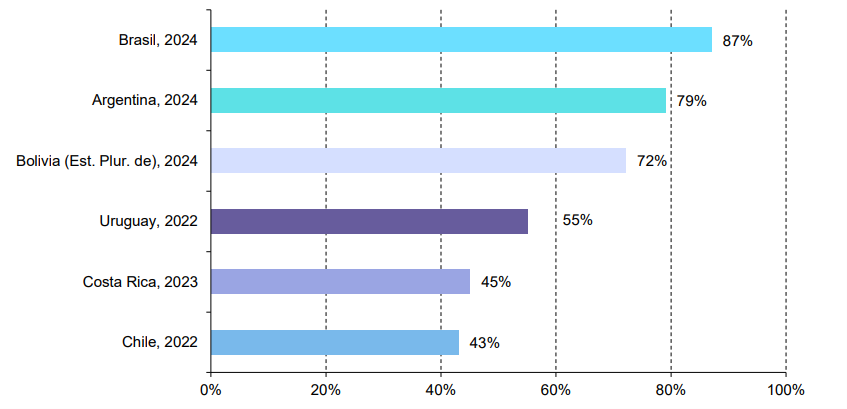
Family members and friends are consistently identified as the primary sources of help following upsetting online experiences. In contrast, teachers and other adults in school settings are approached less frequently.
Families and peers remain children’s first line of support when problems arise online.
This pattern highlights the importance of supportive relationships in helping children navigate challenges online. It also raises questions about whether schools are sufficiently equipped to respond to the emotional and social dimensions of children’s digital lives.
Guidance matters more than restriction
The report provides valuable insights into how adults mediate children’s internet use.
Across countries, children are more likely to report experiences of active mediation than purely restrictive approaches. Parents and caregivers frequently talk with children about their online experiences, provide advice and offer support when difficulties arise.
Restrictive strategies – such as prohibitions and limitations – are also present, but tend to coexist alongside more communicative forms of engagement.
Within schools, mediation often focuses on educational uses of digital technologies, such as finding information or supporting learning activities. Less attention appears to be given to social relationships, emotional wellbeing and managing online interactions.
As digital technologies increasingly permeate all aspects of children’s lives, these socio-emotional dimensions warrant greater consideration.
Children are confident users – but not always confident creators
Most children report feeling capable in areas related to information seeking, communication and online safety. High levels of confidence are also evident in privacy and security-related skills, suggesting that many children feel able to manage aspects of their digital lives independently.
However, creative digital skills appear less developed. With the exception of Argentina (78%) and Uruguay (65%), fewer than half of children report feeling capable of uploading videos, music or other content they have created themselves. Across all countries, only a minority feel confident editing or adapting digital content produced by others.
Download full report (in Spanish)
Children are confident users – but not always confident creators
Patterns of inequality are evident here too. Self-reported digital skills tend to increase with age, while socio-economic differences persist across multiple dimensions of digital competence.
Although gender differences are generally small, the findings suggest that not all children have equal opportunities to move from being consumers of digital content to becoming creators and active participants.
Generative AI is the next frontier
The report also begins to explore children’s encounters with generative artificial intelligence (AI). Knowledge and use of AI tools appear to mirror existing patterns of digital inequality, with children from more advantaged backgrounds often reporting greater familiarity with these technologies and higher levels of engagement.
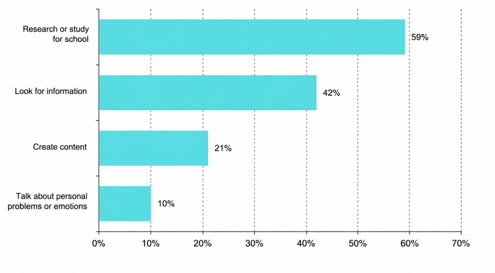
At the same time, the findings suggest that generative AI is becoming embedded in children’s everyday lives, particularly for learning. In Brazil, for example, 59% of children aged 9–17 who had used generative AI reported using it to research or study for school, while 42% used it to search for information.
Brazil: Children’s use of generative AI
As AI becomes part of children’s everyday lives, existing digital inequalities risk becoming AI inequalities.
As AI becomes increasingly integrated into education, communication and everyday life, these findings raise important questions about who benefits from emerging technologies – and who risks being left behind.
Towards a child rights-by-design approach
Taken together, the findings point towards a clear agenda for governments, industry, educators, and families. Improving connectivity remains important, but access alone is no longer enough. Realising children’s rights in the digital environment requires action across multiple fronts.
Efforts must:
- Ensure equitable access to the devices and connectivity children need to participate fully in digital society;
- Etrengthen meaningful digital skills, enabling children not only to navigate online spaces safely but also to critically engage with emerging technologies such as AI;
- Support creative, civic and participatory opportunities online, recognising children’s rights to expression, information and participation;
- Equip schools and support services to address the social and emotional dimensions of children’s digital experiences, alongside educational outcomes;
- Embed children’s rights into the design of digital services, ensuring that safety, privacy and wellbeing are built in from the outset rather than added as an afterthought; and
- Develop and enforce effective regulation that promotes accountability and places children’s best interests at the centre of the digital ecosystem.
Access alone is no longer enough: meaningful digital inclusion requires devices, skills, support and digital environments designed with children’s rights in mind.
Perhaps most importantly, the report reminds us that children’s own perspectives are indispensable. Their experiences reveal not only the challenges of growing up in increasingly digital societies, but also the opportunities that meaningful participation online can provide. Listening to children is therefore not simply good practice; it is an essential part of developing regulation, policies and digital services that genuinely reflect their rights, needs and aspirations.
As policymakers across the region grapple with questions of regulation, digital inclusion and emerging technologies such as AI, a child rights-by-design approach offers a way forward: one that shifts responsibility away from children themselves and towards creating digital environments that enable all children to be protected, empowered and able to thrive online.
Download full report (in Spanish)
Further reading
- Rising risks reported by Latin American countries
- Country findings: Argentina, Bolivia, Brazil, Chile, Costa Rica, Uruguay
- Latin America Kids Online
Image credit: Helena Lopes on Pexels